These 4th Grade Virginia Science SOL vocabulary review activities are mini-challenges—short, auto-graded tasks that give students quick checks for understanding with immediate feedback.
You can easily add any of these activities to your LMS in just a few clicks. Simply open an activity, scroll to the bottom, and use Embed (Canvas or Schoology) or Share the Link (Google Classroom). Students can retry the activity until they are successful, then submit a screenshot of their score for credit. Google Form: Suggest a Mini-Challenge Topic or Activity
Scientific and Engineering Practices
VA SOL 4.1
The student will demonstrate an understanding of scientific and engineering practices by:
a) asking questions and defining problems
identify scientific and non-scientific questions
develop hypotheses as cause-and-effect relationships
define a simple design problem that can be solved through the development of an object, tool, process, or system
b) planning and carrying out investigations
identify variables when planning an investigation
collaboratively plan and conduct investigations
use tools and/or materials to design and/or build a device that solves a specific problem
take metric measurements using appropriate tools
measure elapsed time
c) interpreting, analyzing, and evaluating data
organize and represent data in bar graphs and line graphs
interpret and analyze data represented in bar graphs and line graphs
compare two different representations of the same data (e.g., a set of data displayed on a chart and a graph)
analyze data from tests of an object or tool to determine whether it works as intended
d) constructing and critiquing conclusions and explanations
use evidence (i.e., measurements, observations, patterns) to construct or support explanations and to make inferences
e) developing and using models
develop and/or use models to explain natural phenomena
identify limitations of models
f) obtaining, evaluating, and communicating information
read and comprehend reading-level-appropriate texts and/or other reliable media
communicate scientific information, design ideas, and/or solutions with others
Key Terms
- scientific question: a question that can be answered by testing or observing.
- non-scientific question: a question that cannot be tested or answered with evidence.
- hypothesis: a prediction about what will happen and why.
- investigation: a planned test used to answer a question.
- independent variable: the thing you change in an experiment.
- dependent variable: the thing you measure or observe in an experiment.
- constant variables: the things that stay the same during an experiment.
- data: information collected during an investigation.
- measurement: a way to find the size, amount, or length of something using tools.
- metric units: standard units used in science, such as meters, grams, and liters.
- elapsed time: the amount of time that passes from start to finish.
- bar graph: a graph that uses bars to compare data.
- line graph: a graph that shows how data changes over time.
- model: a representation used to explain or show how something works.
- evidence: observations or measurements used to support a claim.
- conclusion: an explanation based on data and evidence from an investigation.
- inference: a logical idea based on observations and evidence.
- design problem: a challenge that can be solved by creating or improving a tool or system.
- solution: a design or idea that solves a problem.
- communicate: to share information with others.
Plants
VA SOL 4.2
The student will investigate and understand that plants and animals have structures that distinguish them from one
another and play vital roles in their ability to survive. Key ideas include
a) the survival of plants and animals depends on photosynthesis;
b) plants and animals have different structures and processes for obtaining energy; and
c) plants and animals have different structures and processes for creating offspring.
Key Terms
- plants: living things that make their own food using sunlight.
- animals: living things that must eat other organisms to get energy.
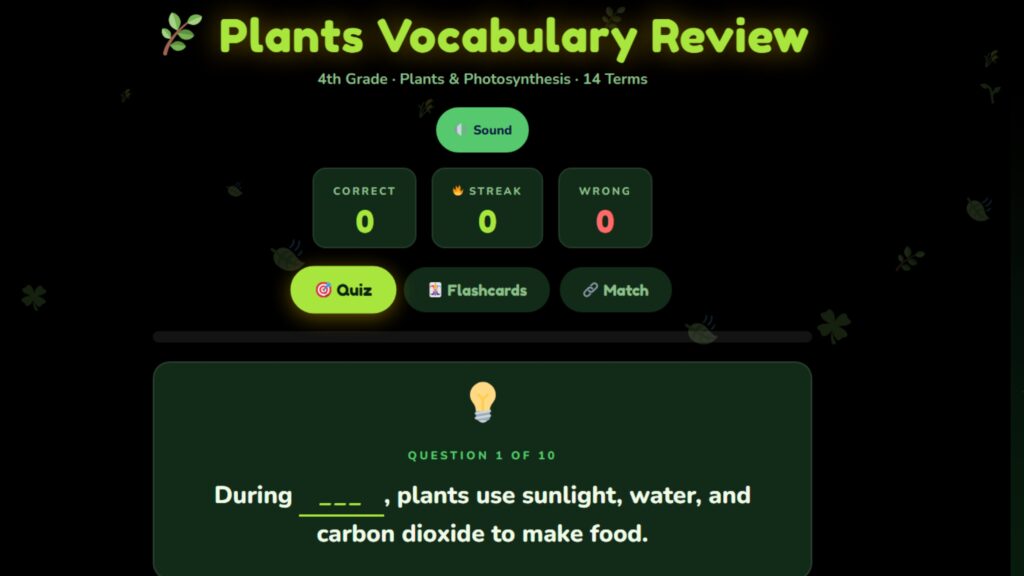
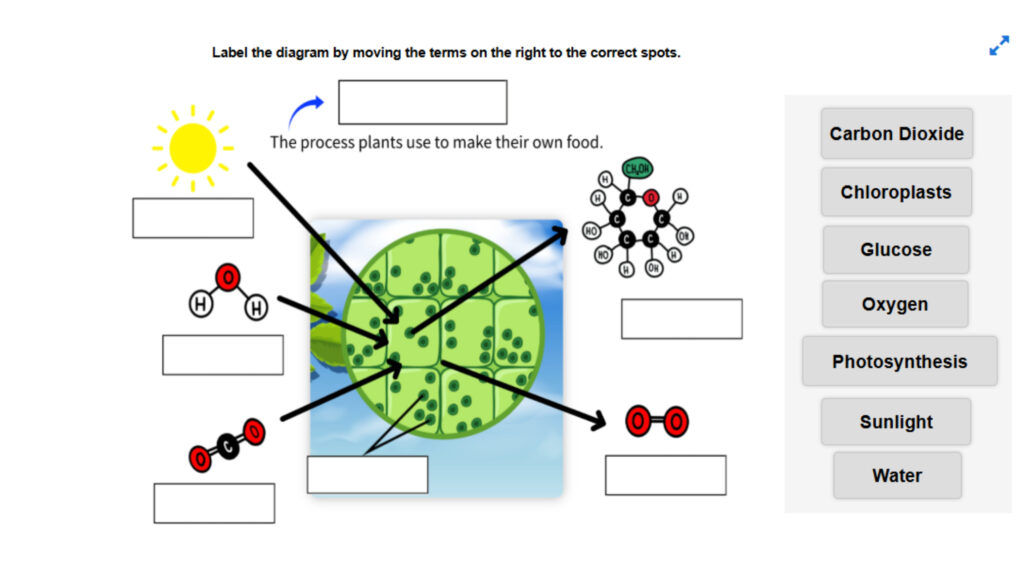
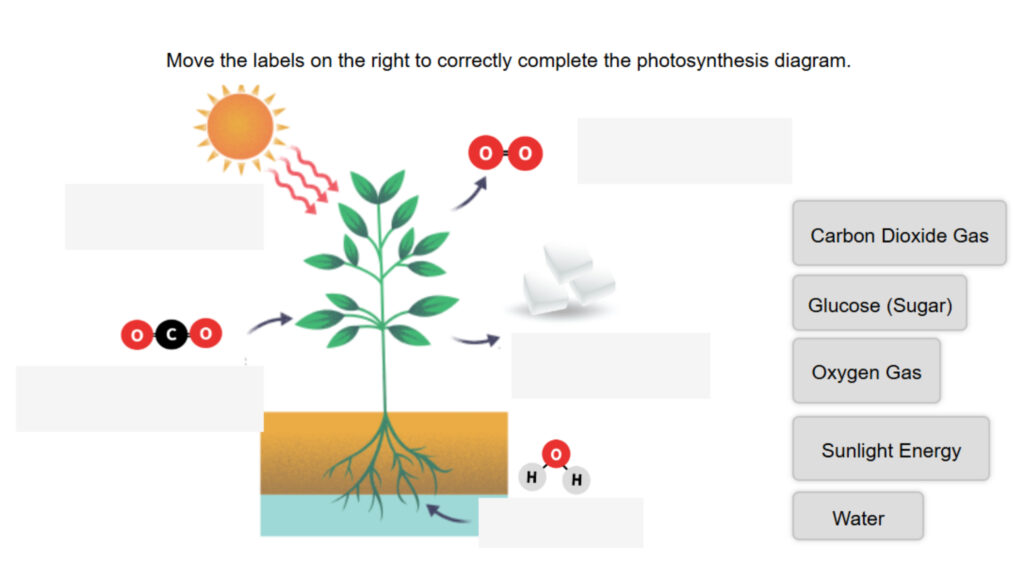
- photosynthesis: the process plants use to make their own food using sunlight, water, and carbon dioxide.
- chlorophyll: the green substance in plants that helps capture energy from sunlight.
- energy: what living things need to grow, move, and survive.
- roots: the part of a plant that holds it in place and absorbs water and nutrients from the soil.
- stem: the part of a plant that supports it and moves water and nutrients throughout the plant.
- leaves: the part of a plant where photosynthesis mostly happens.
- flower: the part of a plant that helps it reproduce and make seeds.
- reproduce: to make more of the same kind of organism.
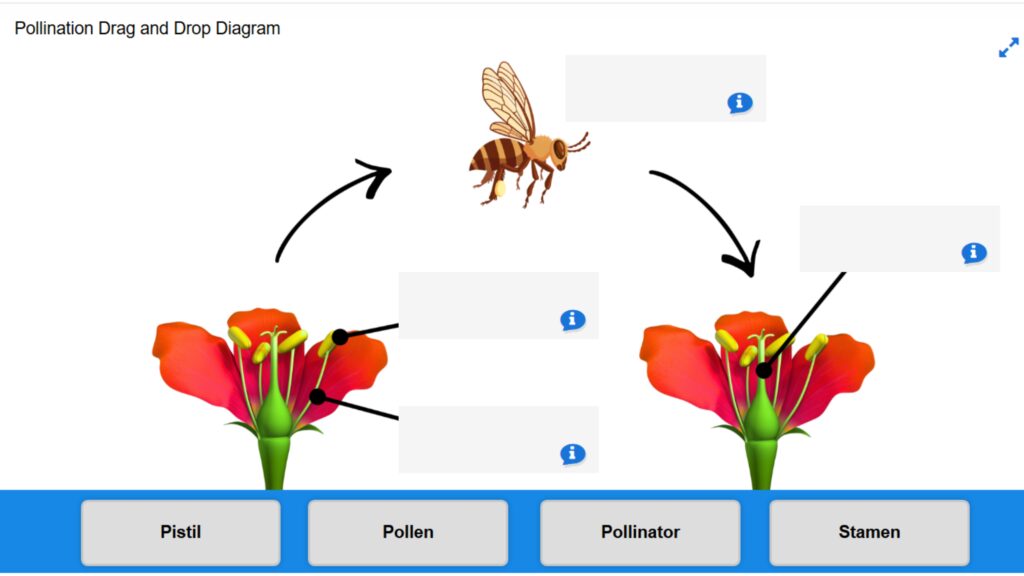
- pollination: the process of moving pollen so plants can make seeds.
- stamen: the part of a flower that makes pollen, which is needed for reproduction.
- pistil: the part of a flower that receives pollen and helps the plant make seeds.
- organism: a living thing.
Ecosystems
VA SOL 4.3
The student will investigate and understand that organisms, including humans, interact with one another and with the
nonliving components in the ecosystem. Key ideas include
a) interrelationships exist in populations, communities, and ecosystems;
b) food webs show the flow of energy within an ecosystem;
c) changes in an organism’s niche and habitat may occur at various stages in its life cycle; and
d) classification can be used to identify organisms.
Key Terms
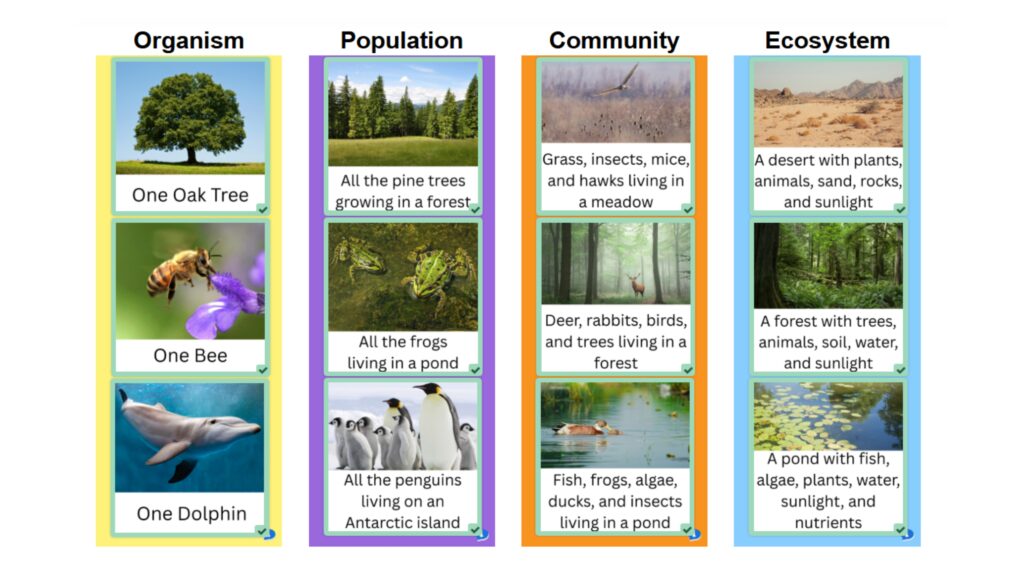
- ecosystem: a place where living and nonliving things interact.
- living things: organisms such as plants and animals.
- nonliving things: parts of an environment that are not alive, such as water, sunlight, air, and soil.
- population: all the same type of organism living in the same place at the same time.
- community: all the different populations living and interacting in the same place.
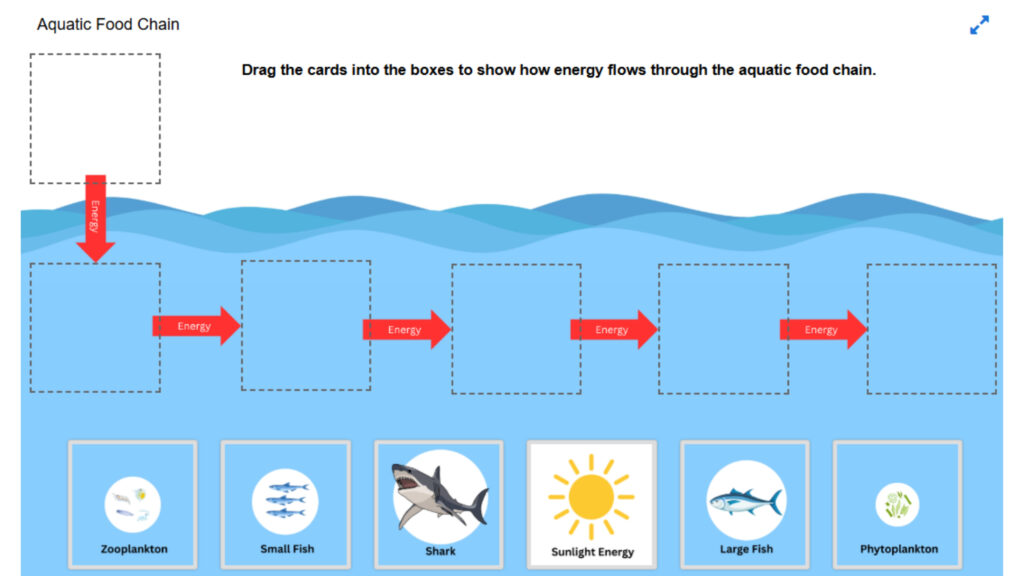
- food chain: a model that shows how energy moves from one organism to another.
- food web: a model that shows many connected food chains in an ecosystem.
- producer: an organism, like a plant, that makes its own food using sunlight.
- consumer: an organism that eats other organisms to get energy.
- decomposer: an organism that breaks down dead plants and animals and returns nutrients to the environment.
- energy: what organisms need to live, grow, and survive.
- habitat: the place where an organism lives.
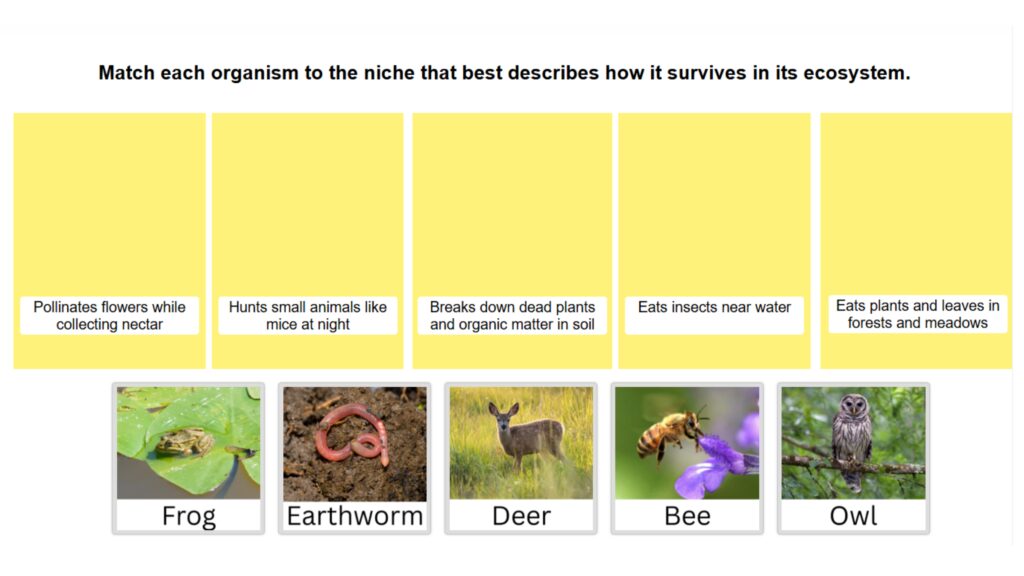
- niche: the role or job of an organism in its environment, including how it gets food and interacts with other organisms.
- interact: to affect or work with one another.
- compete: when organisms try to get the same resources, such as food, water, or space.
- life cycle: the stages an organism goes through as it grows and develops.
- classify: to group things based on similarities and differences.
- dichotomous key: a tool used to identify organisms based on their characteristics.
Weather and Climate
VA SOL 4.4
The student will investigate and understand that weather conditions and phenomena affect ecosystems and can be
predicted. Key ideas include
a) weather measurements create a record that can be used to make weather predictions;
b) common and extreme weather events affect ecosystems; and
c) long-term seasonal weather trends determine the climate of a region.
Key Terms
- weather: the day-to-day conditions of the air, including temperature, wind, and precipitation.
- climate: the average weather of a place over a long period of time.
- temperature: how hot or cold something is.
- precipitation: water that falls from the sky, such as rain, snow, sleet, or hail.
- wind: moving air.
- air pressure: the force of air pushing on Earth’s surface.
- weather data: information collected about weather conditions over time.
- weather prediction: using weather data to forecast what the weather will be like.
- meteorologist: a scientist who studies weather and makes predictions.
- thermometer: a tool used to measure temperature.
- barometer: a tool used to measure air pressure.
- anemometer: a tool used to measure wind speed.
- rain gauge: a tool used to measure how much rain has fallen.
- clouds: collections of tiny water droplets or ice crystals in the sky.
- cumulus clouds: fluffy, white clouds that usually mean fair weather.
- cumulonimbus clouds: tall, dark clouds that can produce thunderstorms.
- stratus clouds: flat, gray clouds that often bring light rain or drizzle.
- cirrus clouds: thin, wispy clouds that usually mean fair weather but can signal a change is coming.
- storm: a type of weather with strong wind, precipitation, or other extreme conditions.
- thunderstorm: a storm with heavy rain, thunder, and lightning.
- hurricane: a large storm that forms over warm ocean water with very strong winds.
- tornado: a spinning column of air that forms from a thunderstorm.
- extreme weather: severe weather events that can cause damage, such as hurricanes, tornadoes, or ice storms.
- ecosystem: a place where living and nonliving things interact.
- pattern: something that repeats or happens in a predictable way.
The Solar System
VA SOL 4.5
The student will investigate and understand that the planets have characteristics and a specific place in the solar
system. Key ideas include
a) planets rotate on their axes and revolve around the sun;
b) planets have characteristics and a specific order in the solar system; and
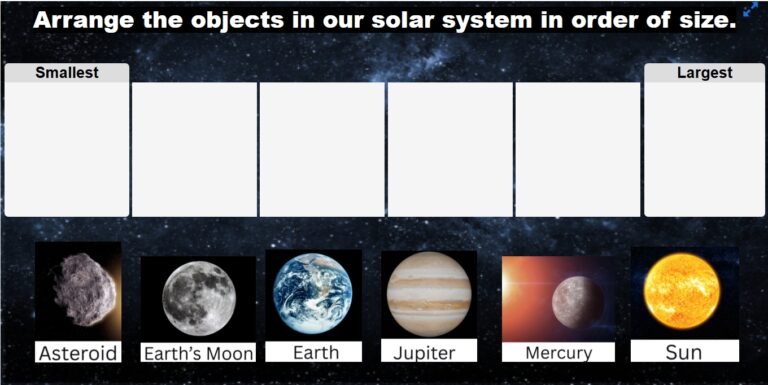
c) the sizes of the sun and planets can be compared to one another.
Key Terms
- solar system: the Sun and all the objects that move around it, including the planets.
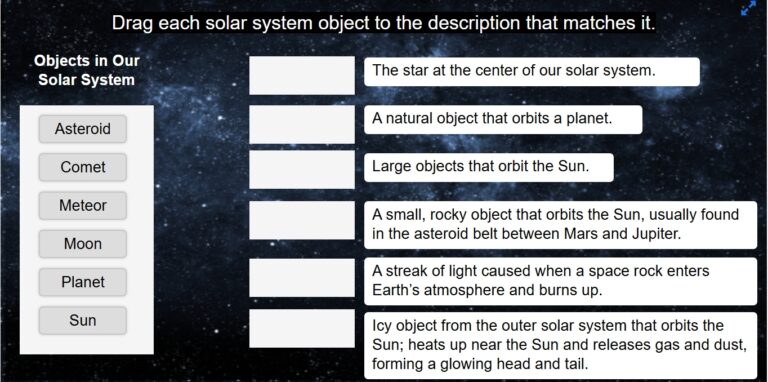
- sun: a star at the center of the solar system that gives light and heat.
- planet: a large object that moves around the Sun.
- rotation: the spinning of a planet on its axis that causes day and night.
- revolution: the movement of a planet around the Sun that takes one year.
- orbit: the path a planet follows as it moves around the Sun.
- axis: an imaginary line that a planet spins around.
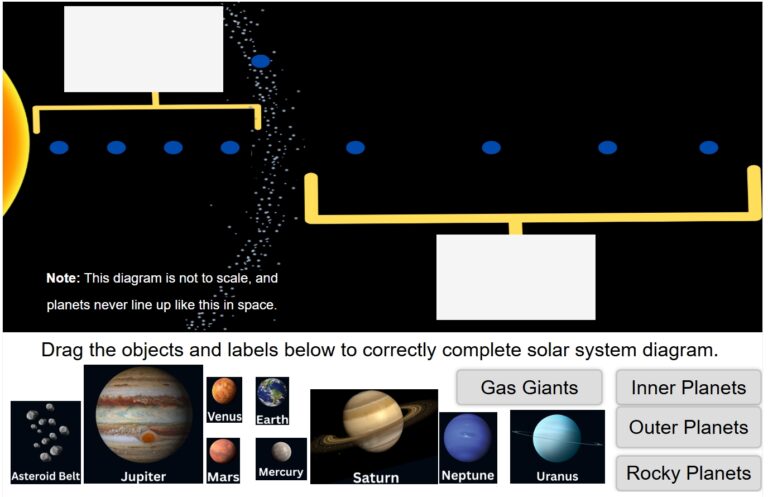
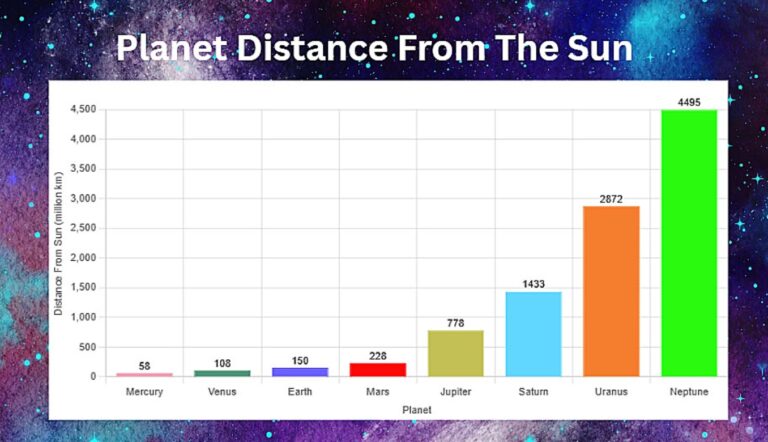
- order of planets: the arrangement of the planets based on their distance from the Sun.
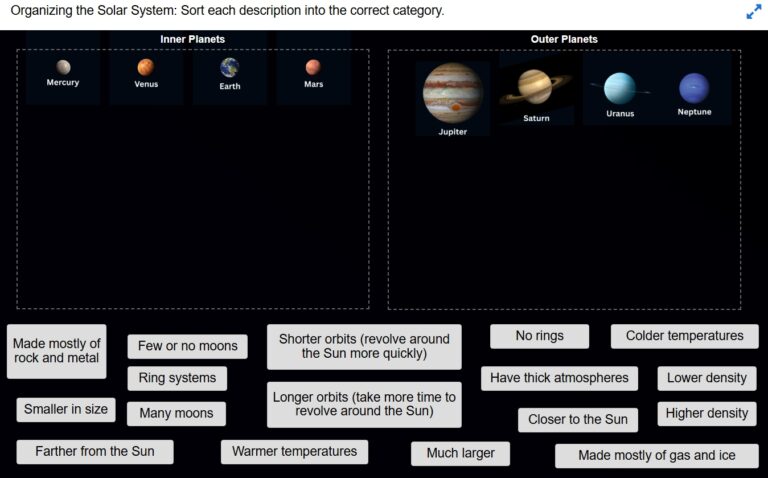
- terrestrial planets: small, rocky planets including Mercury, Venus, Earth, and Mars.
- gas giants: very large planets made mostly of gas including Jupiter, Saturn, Uranus, and Neptune.
- characteristics: features that describe a planet, such as size, temperature, and composition.
- atmosphere: a layer of gases surrounding a planet.
- distance from the Sun: how far a planet is from the Sun, which affects its temperature.
- size: how big an object is compared to other objects.
- compare: to look at how things are the same or different.
- earth: the third planet from the Sun and the only known planet that supports life.
- pluto: a dwarf planet that is not considered a planet because it is small and has an unusual orbit.
Earth/Moon/Sun and Solar System
VA SOL 4.6
The student will investigate and understand that there are relationships among Earth, the moon, and the sun. Key
relationships include
a) the motions of Earth, the moon, and the sun;
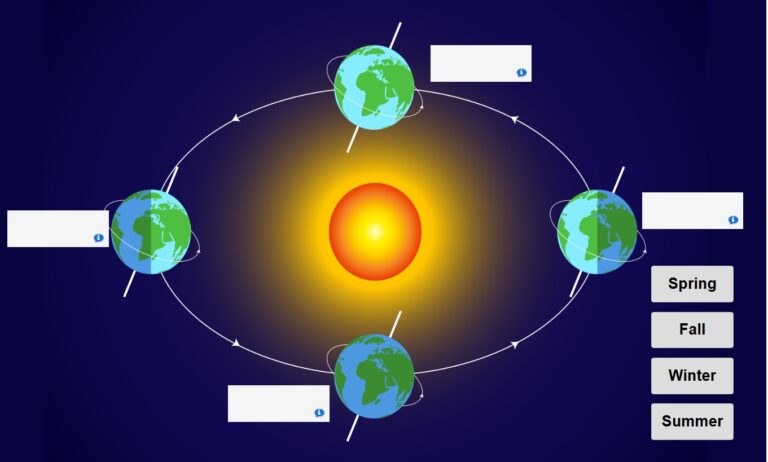
b) the causes for Earth’s seasons;
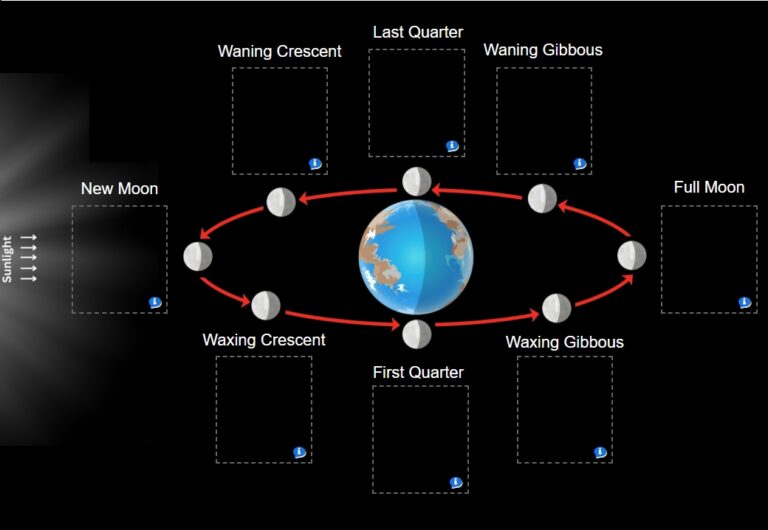
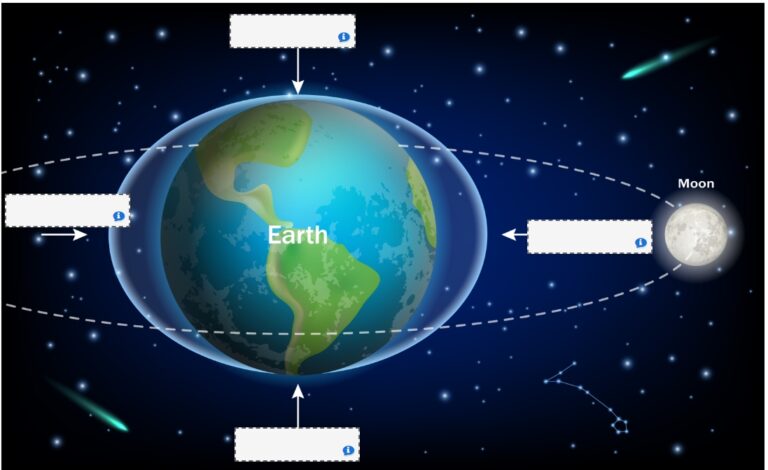
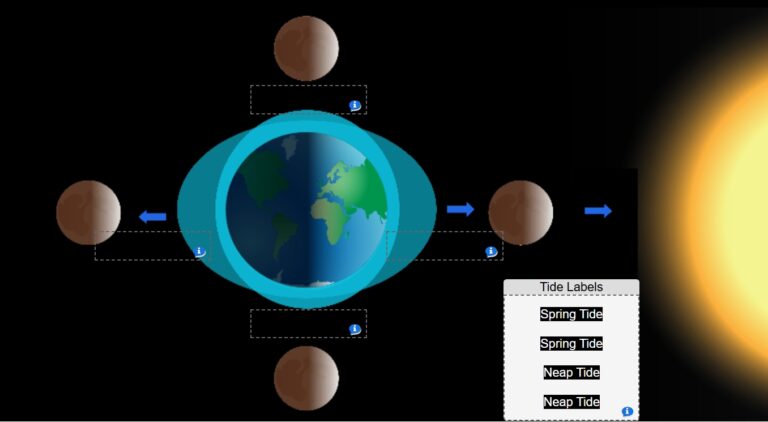
c) the causes for the four major phases of the moon and the relationship to the tide cycles; and
d) the relative size, position, age and makeup of Earth, the moon, and the sun.
Key Terms
- earth: the third planet from the Sun that supports life and rotates and revolves in space.
- moon: a natural satellite that orbits Earth and reflects sunlight.
- sun: a star at the center of the solar system that provides light and heat.
- rotation: the spinning of Earth on its axis that causes day and night.
- revolution: the movement of Earth around the Sun that takes one year.
- orbit: the path an object follows as it moves around another object.
- axis: an imaginary line through Earth that it spins around.
- tilt (axial tilt): the slant of Earth on its axis that causes seasons.
- season: a time of year with different weather caused by Earth’s tilt and its movement around the Sun.
- sunlight: energy from the Sun that lights and warms Earth.
- angle of sunlight: how directly sunlight hits Earth, which affects temperature.
- phase of the moon: the different shapes of the moon we see from Earth based on its position.
- new moon: the phase when the moon is not visible from Earth.
- first quarter moon: the phase when half of the moon is visible and growing.
- full moon: the phase when the entire moon is visible from Earth.
- last (third) quarter moon: the phase when half of the moon is visible and shrinking.
- reflection: the bouncing of light off a surface, such as sunlight off the moon.
- tide: the rise and fall of ocean water caused by the gravitational pull of the moon and the sun.
- high tide: when ocean water rises to its highest level.
- low tide: when ocean water falls to its lowest level.
- alignment: when the Earth, moon, and sun are lined up in a straight line.
- position: where an object is located in space compared to other objects.
- relative size: how big one object is compared to another.
- composition: what something is made of.
- atmosphere: a layer of gases surrounding a planet.
- gravity: the force that pulls objects toward each other.
- temperature: how hot or cold something is.
- day: the time it takes Earth to complete one rotation.
- year: the time it takes Earth to complete one revolution around the Sun.
- satellite: an object that orbits a planet, such as the moon.
- star: a large, glowing ball of gas that produces its own light, like the Sun.
Ocean Environment
VA SOL 4.7
The student will investigate and understand that the ocean environment has characteristics. Key characteristics include
a) geology of the ocean floor;
b) physical properties and movement of ocean water; and
c) interaction of organisms in the ocean.
Key Terms
- ocean: a large body of salt water that covers most of Earth’s surface.
- ocean floor: the bottom of the ocean made up of different landforms.
- continental shelf: the shallow, gently sloping edge of the ocean floor near the land.
- continental slope: the steep area of the ocean floor that drops down from the continental shelf.
- continental rise: the area of the ocean floor where sediments build up at the bottom of the slope.
- abyssal plain: a large, flat, deep area of the ocean floor.
- ocean trench: a very deep, narrow valley in the ocean floor.
- sediment: small pieces of sand, mud, and rock that settle on the ocean floor.
- depth: how deep the ocean water is from the surface to the bottom.
- ocean water: a mixture of water, dissolved salts, and gases.
- salinity: the amount of salt dissolved in water.
- dissolved gases: gases such as oxygen that are mixed into ocean water and used by organisms.
- current: the movement of ocean water in a specific direction.
- ocean current: a large movement of ocean water caused by wind and differences in temperature.
- gulf stream: a warm ocean current that moves water through the Atlantic Ocean.
- wind: moving air that helps cause ocean currents.
- temperature: how hot or cold something is.
- tide: the regular rise and fall of ocean water.
- wave: the movement of water at the surface of the ocean, usually caused by wind.
- mixing: the movement of water that blends different parts of the ocean together.
- marine organism: a living thing that lives in the ocean.
- plankton: tiny organisms that float in the ocean and cannot swim against currents.
- swimming organism: an organism that can move through the water on its own.
- bottom-dwelling organism: an organism that lives on or attached to the ocean floor.
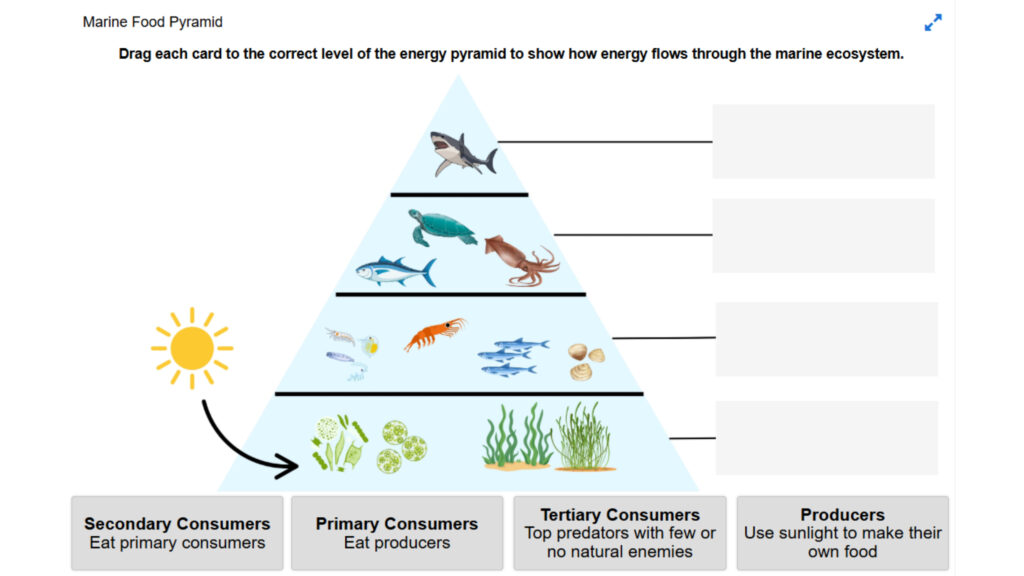
- producer: an organism, such as algae, that makes its own food using sunlight.
- consumer: an organism that gets energy by eating other organisms.
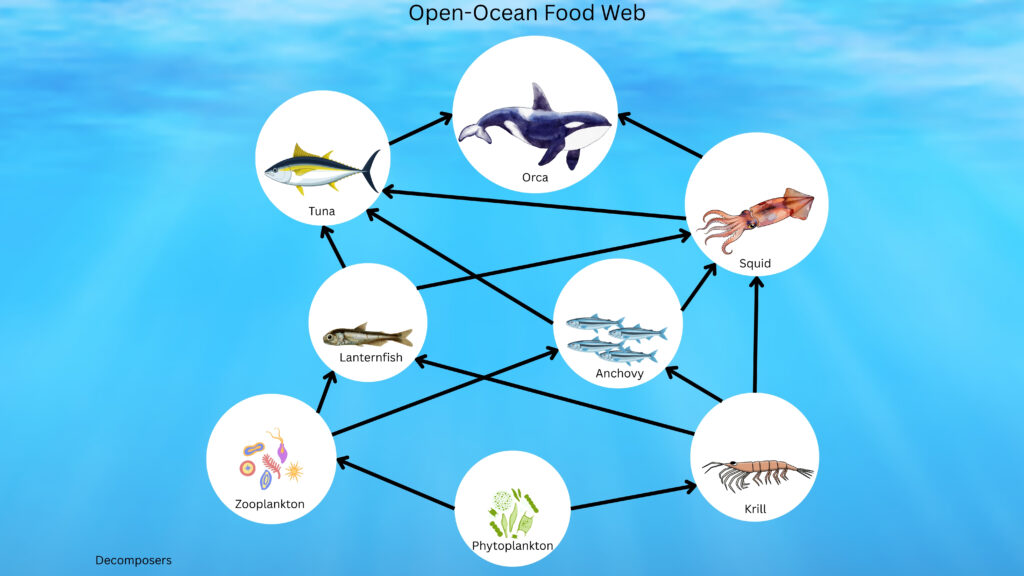
- food chain: a model that shows how energy moves from one organism to another.
- food web: a model that shows many connected food chains in an ocean ecosystem.
- interaction: how organisms affect or depend on each other and their environment.
- habitat: the place where an organism lives.
- environment: the surroundings where organisms live, including living and nonliving parts.
Virginia’s Resources
VA SOL 4.8
The student will investigate and understand that Virginia has important natural resources. Key resources include
a) watersheds and water;
b) plants and animals;
c) minerals, rocks, and ores; and
d) forests, soil, and land.
Key Terms
- natural resource: something found in nature that people use.
- watershed: an area of land where water flows to the same river, lake, or bay.
- water resource: sources of water such as rivers, lakes, bays, and the ocean that people and organisms use.
- river: a large stream of flowing water that moves toward a larger body of water.
- lake: a body of water surrounded by land.
- bay: a body of water partly surrounded by land.
- ocean: a very large body of salt water.
- Chesapeake Bay: a large bay in Virginia that is part of a major watershed.
- pollution: harmful materials that enter the environment and can damage natural resources.
- runoff: water that flows over land and carries materials into rivers and streams.
- plants: living organisms that make their own food and provide oxygen, food, and habitats.
- animals: living organisms that depend on plants or other animals for food and provide resources for humans.
- habitat: the place where a plant or animal lives.
- erosion: the movement of soil by water, wind, or ice.
- soil: the top layer of Earth where plants grow.
- land: the solid part of Earth where people live, work, and build.
- forest: a large area of land covered with trees.
- natural forest: a forest that grows on its own without being planted by humans.
- cultivated forest: a forest planted and managed by people.
- mineral: a natural substance found in Earth that is used to make products.
- rock: a solid natural material made of one or more minerals.
- ore: a rock that contains metal or other useful materials that can be mined.
- resource use: how people use natural resources for things like food, shelter, and energy.
- conservation: the careful use and protection of natural resources.
- environment: the surroundings where living and nonliving things exist.
- ecosystem: a system where living and nonliving things interact.
- population: a group of the same type of organism living in one area.
- community: all the different populations living together in one area.