Energy
MS-PS3-1: Construct and interpret graphical displays of data to describe the relationships of kinetic energy to the mass of an object and to the speed of an object.
Bell Ringers
Energy Phenomena and Questions

These bell ringer presentations include dozens of real-world phenomena that connect directly to key energy concepts.
- Observe and Wonder
- States of Matter
- Heat Transfer
- Thermal Conductors and Insulators
- Conservation of Energy and Forms of Energy
Simulation
Ball Bounce Height
Investigation
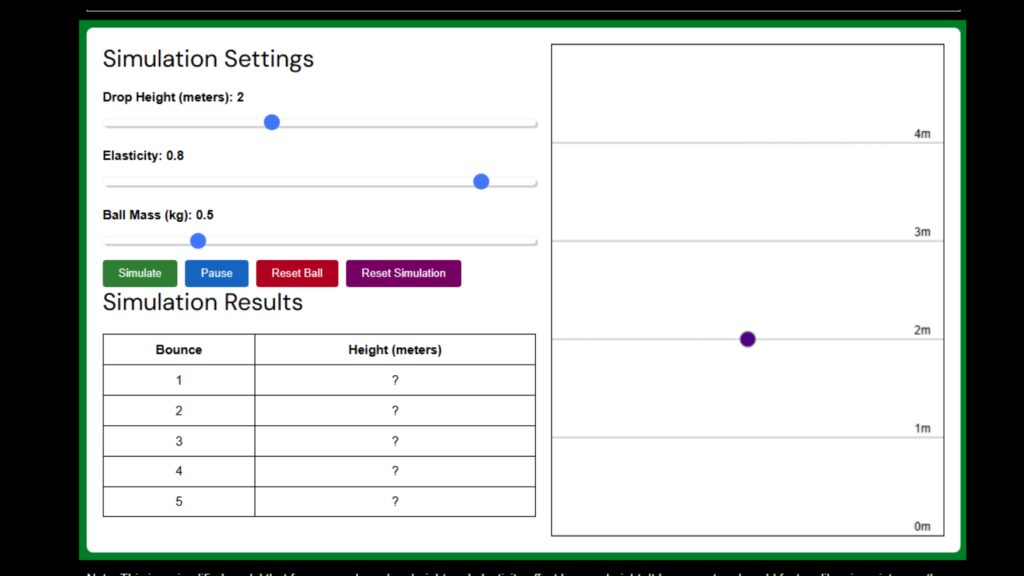
The VST Ball Bounce Investigation simulation lets students adjust drop height, ball mass, and elasticity to observe how energy changes affect bounce height. Students collect data from multiple bounces to analyze patterns, graph results, and explore energy transfer and transformation.
Interactive
Potential and Kinetic Energy
Skate Park
Concepts:
- Use PhET’s Skate Park simulation to explore potential and kinetic energy.
- NGSS MS-PS3
- Virginia SOL PS.5
- TEKS S.6.8
- Signature Page: Users can sign and screenshot the final page for proof of completion.
- Teacher Click-Through: A version without the screenshot page for quick module review.
- Worksheet

Mini-Challenges
Potential and
Kinetic Energy
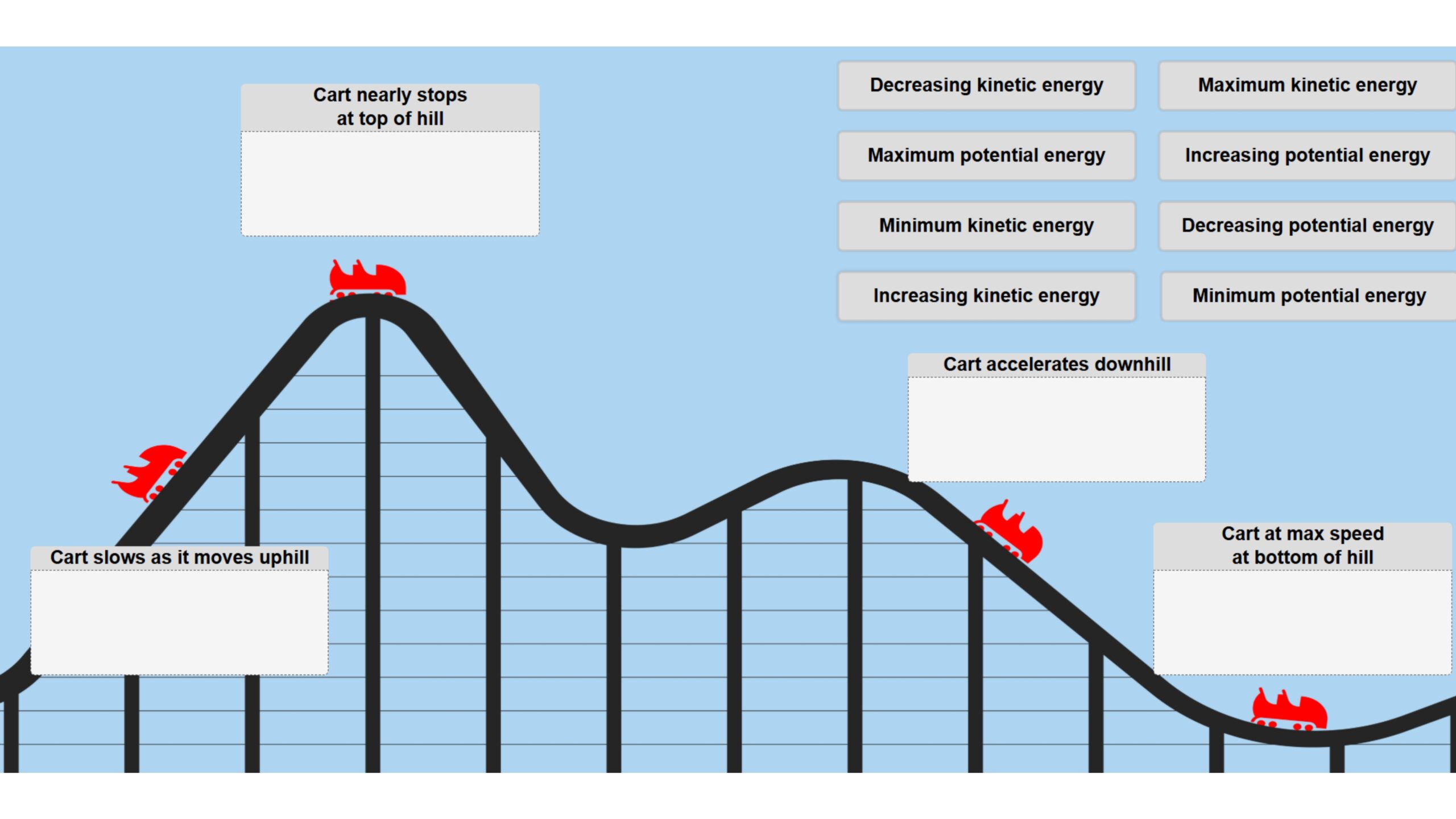
These Energy Forms and Transformations mini-challenges are quick, interactive practice activities that help students identify and track how energy changes- from potential to kinetic, through heat transfer (conduction, convection, radiation), and in real-world systems like power plants and PhET simulations.
MS-PS3-2: Develop a model to describe that when the arrangement of objects interacting at a distance changes, different amounts of potential energy are stored in the system.
Bell Ringers
Energy Phenomena and Questions

These bell ringer presentations include dozens of real-world phenomena that connect directly to key energy concepts.
- Observe and Wonder
- States of Matter
- Heat Transfer
- Thermal Conductors and Insulators
- Conservation of Energy and Forms of Energy
Simulation
Ball Bounce Height
Investigation
The VST Ball Bounce Investigation simulation lets students adjust drop height, ball mass, and elasticity to observe how energy changes affect bounce height. Students collect data from multiple bounces to analyze patterns, graph results, and explore energy transfer and transformation.

Interactive
Potential and Kinetic Energy
Skate Park
Concepts:
- Use PhET’s Skate Park simulation to explore potential and kinetic energy.
- NGSS MS-PS3
- Virginia SOL PS.5
- TEKS S.6.8
- Signature Page: Users can sign and screenshot the final page for proof of completion.
- Teacher Click-Through: A version without the screenshot page for quick module review.
- Worksheet

Mini-Challenges
Potential and
Kinetic Energy
These Energy Forms and Transformations mini-challenges are quick, interactive practice activities that help students identify and track how energy changes- from potential to kinetic, through heat transfer (conduction, convection, radiation), and in real-world systems like power plants and PhET simulations.
MS-PS3-3: Apply scientific principles to design, construct, and test a device that either minimizes or maximizes thermal energy transfer.
Bell Ringers
Energy Phenomena and Questions

These bell ringer presentations include dozens of real-world phenomena that connect directly to key energy concepts.
- Observe and Wonder
- States of Matter
- Heat Transfer
- Thermal Conductors and Insulators
- Conservation of Energy and Forms of Energy
Simulation
Heat Transfer
to Different Materials

Students select a material and a light intensity, then observe how the material’s temperature changes over a 12-minute simulation. By advancing the simulation one minute at a time, students collect temperature data and compare how different materials and light intensities affect heat transfer.
Interactive
Virtual
Heating Ice Lab
Measure, record, and graph the temperature of ice as it transitions through phase changes—melting, heating, and eventually boiling. Use the resulting temperature vs. time graph to analyze patterns and answer questions about the states of matter, energy transfer, and phase changes.
Screenshot Signature Page: Users can screenshot their name on the final page for proof of completion.
Interactive
States of Matter, Thermal Energy, & Temperature
Concepts:
Travel the world as you learn about states of matter, thermal energy, and temperature.
Screenshot Signature Page: Users can screenshot their name on the final page for proof of completion.
Interactive
Forms & Transfer of Energy,
Temperature, & Matter
Travel the world and learn about forms of energy, temperature, and states of matter.
- Screenshot Signature Page: Users can sign and screenshot the final page for proof of completion.
Interactive
Heat, States of Matter, Thermal Insulators
Travel the world as you learn about heat, the states and density of water, and insulators.
Screenshot Signature Page: Users can screenshot their name on the final page for proof of completion.
Interactive
Conduction,
Convection, & Radiation
Concepts:
Travel the world as you learn about radiation, convection, and conduction.
Screenshot Signature Page: Users can screenshot their name on the final page for proof of completion.
Interactive
Energy and
its Many Forms
Concepts:
- Explore light, chemical, electrical, mechanical, and thermal energy. Use PhET’s sims to explore how energy changes forms.
- Screenshot Signature Page: Users can sign and screenshot the final page for proof of completion.
- Engineer Design Challenge- On the last page of the interactive module, students use the images, arrows, and writing tool draw and label a system that uses at least 3 forms of energy.

- Teacher Click-Through: A version without the screenshot page for quick module review.
Mini-Challenges
Temperature and
Phase Changes
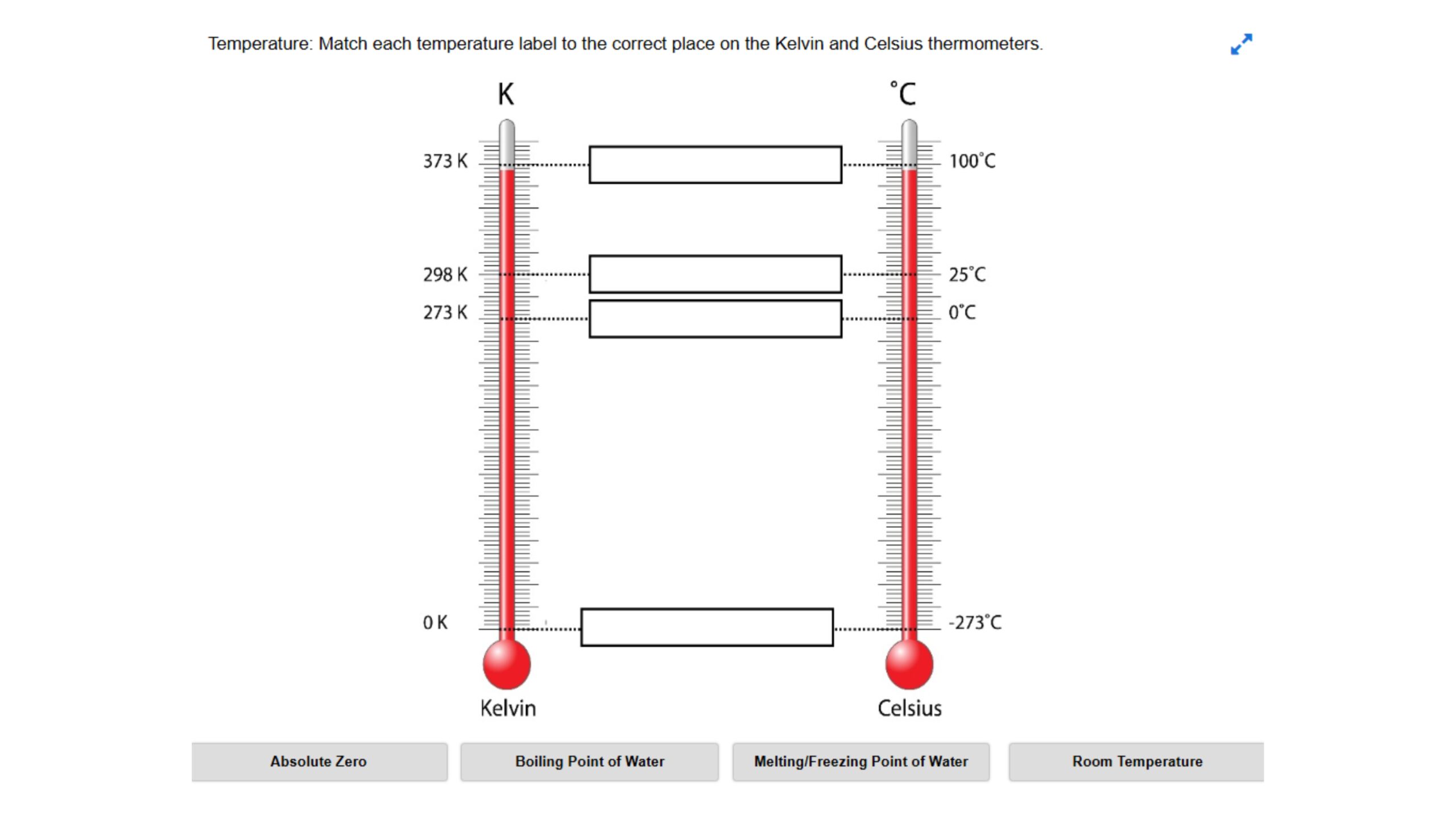
Temperature and Phase Changes Mini-Challenges give students short, interactive practice with temperature measurement, phase change examples, and phase change diagrams.
Mini-Challenges
Thermal Energy and
Heat Transfer
These Energy Forms and Transformations mini-challenges are quick, interactive practice activities that help students identify and track how energy changes- from potential to kinetic, through heat transfer (conduction, convection, radiation), and in real-world systems like power plants and PhET simulations.
MS-PS3-4: Plan an investigation to determine the relationships among the energy transferred, the type of matter, the mass, and the change in the average kinetic energy of the particles as measured by the temperature of the sample.
Bell Ringers
Energy Phenomena and Questions

These bell ringer presentations include dozens of real-world phenomena that connect directly to key energy concepts.
- Observe and Wonder
- States of Matter
- Heat Transfer
- Thermal Conductors and Insulators
- Conservation of Energy and Forms of Energy
Simulation
Heat Transfer
to Different Materials

Students select a material and a light intensity, then observe how the material’s temperature changes over a 12-minute simulation. By advancing the simulation one minute at a time, students collect temperature data and compare how different materials and light intensities affect heat transfer.
Interactive
States of Matter, Thermal Energy, & Temperature
Concepts:
Travel the world as you learn about states of matter, thermal energy, and temperature.
Screenshot Signature Page: Users can screenshot their name on the final page for proof of completion.
Interactive
Forms & Transfer of Energy,
Temperature, & Matter
Travel the world and learn about forms of energy, temperature, and states of matter.
- Screenshot Signature Page: Users can sign and screenshot the final page for proof of completion.
Interactive
Heat, States of Matter, Thermal Insulators
Travel the world as you learn about heat, the states and density of water, and insulators.
Screenshot Signature Page: Users can screenshot their name on the final page for proof of completion.
Mini-Challenges
Temperature and
Phase Changes
Temperature and Phase Changes Mini-Challenges give students short, interactive practice with temperature measurement, phase change examples, and phase change diagrams.
Mini-Challenges
Thermal Energy and
Heat Transfer
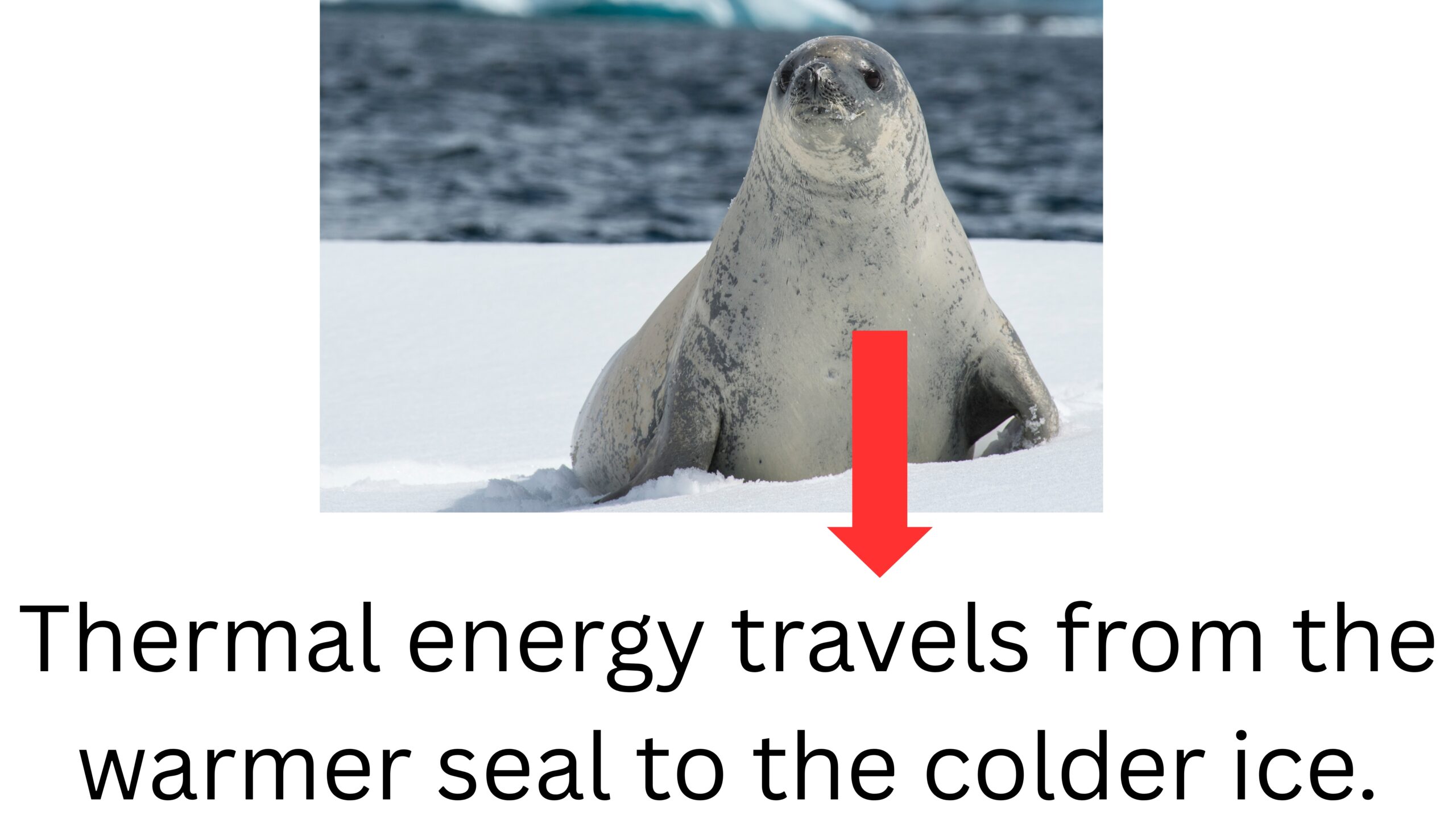
These Thermal Energy and Heat Transfer mini-challenges let students check their understanding of conduction, convection, and radiation, as well as the direction of heat transfer (hot to cold), through a variety of clear, real-world examples.
MS-PS3-5: Construct, use, and present arguments to support the claim that when the kinetic energy of an object changes, energy is transferred to or from the object.
Bell Ringers
Energy Phenomena and Questions

These bell ringer presentations include dozens of real-world phenomena that connect directly to key energy concepts.
- Observe and Wonder
- States of Matter
- Heat Transfer
- Thermal Conductors and Insulators
- Conservation of Energy and Forms of Energy
Simulation
Ball Bounce Height
Investigation
The VST Ball Bounce Investigation simulation lets students adjust drop height, ball mass, and elasticity to observe how energy changes affect bounce height. Students collect data from multiple bounces to analyze patterns, graph results, and explore energy transfer and transformation.
Simulation
Heat Transfer
to Different Materials

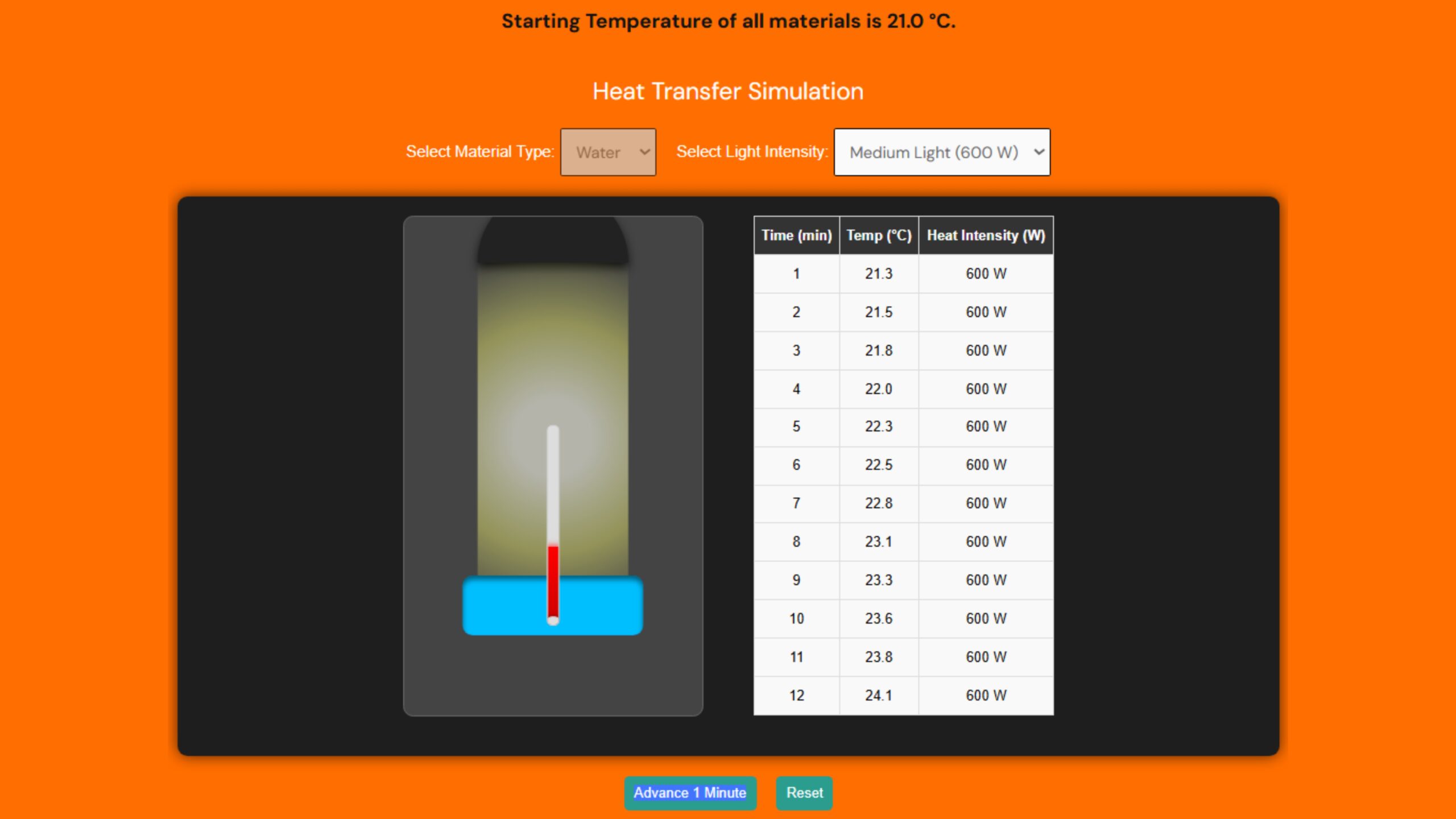
Students select a material and a light intensity, then observe how the material’s temperature changes over a 12-minute simulation. By advancing the simulation one minute at a time, students collect temperature data and compare how different materials and light intensities affect heat transfer.
Interactive
Potential and Kinetic Energy
Skate Park
Concepts:
- Use PhET’s Skate Park simulation to explore potential and kinetic energy.
- NGSS MS-PS3
- Virginia SOL PS.5
- TEKS S.6.8
- Signature Page: Users can sign and screenshot the final page for proof of completion.
- Teacher Click-Through: A version without the screenshot page for quick module review.
- Worksheet
Interactive
Energy and
its Many Forms
Concepts:
- Explore light, chemical, electrical, mechanical, and thermal energy. Use PhET’s sims to explore how energy changes forms.
Standards:
- NGSS MS-PS3
- Virginia SOL PS.5
- TEKS S.6.8
- Screenshot Signature Page: Users can sign and screenshot the final page for proof of completion.
- Engineer Design Challenge- On the last page of the interactive module, students use the images, arrows, and writing tool draw and label a system that uses at least 3 forms of energy.

- Teacher Click-Through: A version without the screenshot page for quick module review.
Interactive
States of Matter, Thermal Energy, & Temperature
Concepts:
Travel the world as you learn about states of matter, thermal energy, and temperature.
Screenshot Signature Page: Users can screenshot their name on the final page for proof of completion.
Interactive
Forms & Transfer of Energy,
Temperature, & Matter
Travel the world and learn about forms of energy, temperature, and states of matter.
- Screenshot Signature Page: Users can sign and screenshot the final page for proof of completion.
Interactive
Heat, States of Matter, Thermal Insulators
Travel the world as you learn about heat, the states and density of water, and insulators.
Screenshot Signature Page: Users can screenshot their name on the final page for proof of completion.
Mini-Challenges
Potential and
Kinetic Energy
These Energy Forms and Transformations mini-challenges are quick, interactive practice activities that help students identify and track how energy changes- from potential to kinetic, through heat transfer (conduction, convection, radiation), and in real-world systems like power plants and PhET simulations.
Mini-Challenges
Temperature and
Phase Changes
Temperature and Phase Changes Mini-Challenges give students short, interactive practice with temperature measurement, phase change examples, and phase change diagrams.
Mini-Challenges
Energy Forms and
Transformations
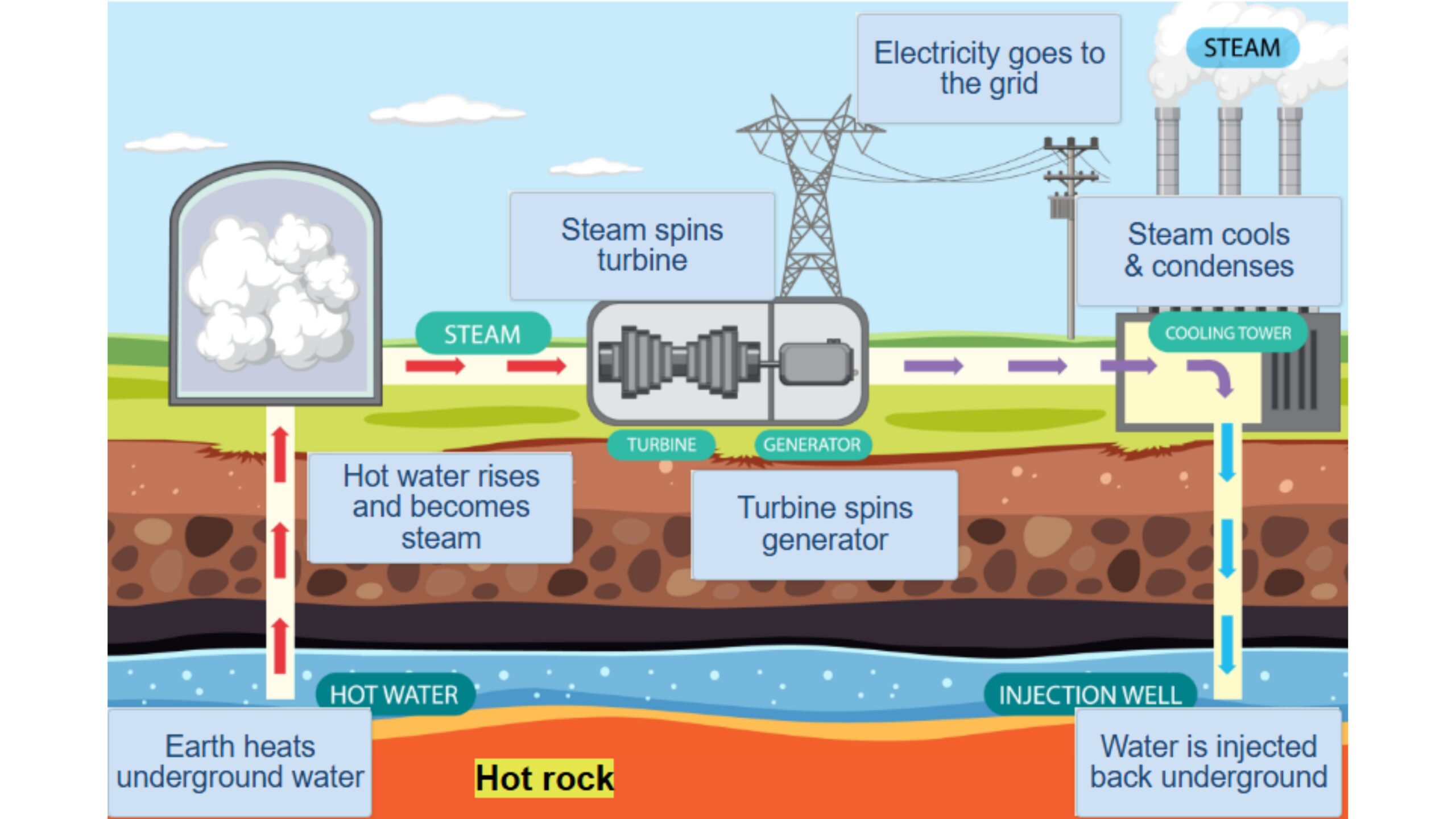
These Energy Forms and Transformations mini-challenges help students identify energy forms and track how energy changes as it moves through real-world systems such as power plants, generators, and everyday devices.
These additional resources are from other organizations that also aim to support science teachers and students! Please note that each link opens in a new tab to external sites.