Face-on view of the orbit
The moon as seen from Earth
The side we see
Learn more about the science
Yes, the moon really does spin
It seems like the moon cannot be spinning, since we always see the same face. But that is the trick: the moon spins exactly once for every trip around Earth, about once every 27 days. The two motions match perfectly, so the same side always points at us. If the moon did not spin at all, we would see every side of it over one orbit.
Is there a dark side of the moon?
No. Hidden is not the same as dark. The far side gets just as much sunlight as the side we see. At new moon, the hidden side is the one in full sunlight:
New moon: the near side is in darkness while the far side is in full sunlight. The far side is hidden from us, not dark.
How do we know what the far side looks like?
Nobody saw it until 1959, when the Luna 3 spacecraft flew around the moon and sent back the first photos. The far side has many more craters and almost none of the smooth dark plains we see from Earth. In April 2026, the Artemis II astronauts flew around the far side and photographed parts of it that no one had ever seen. Compare the two sides:
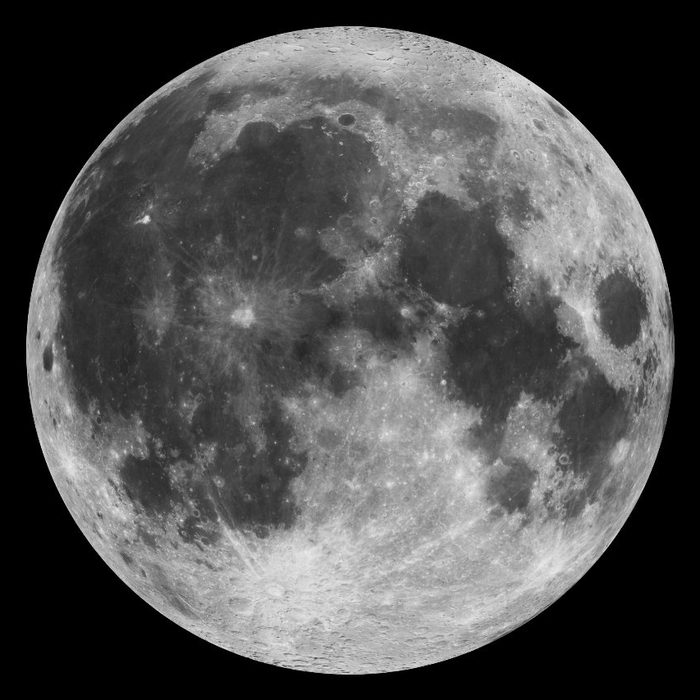
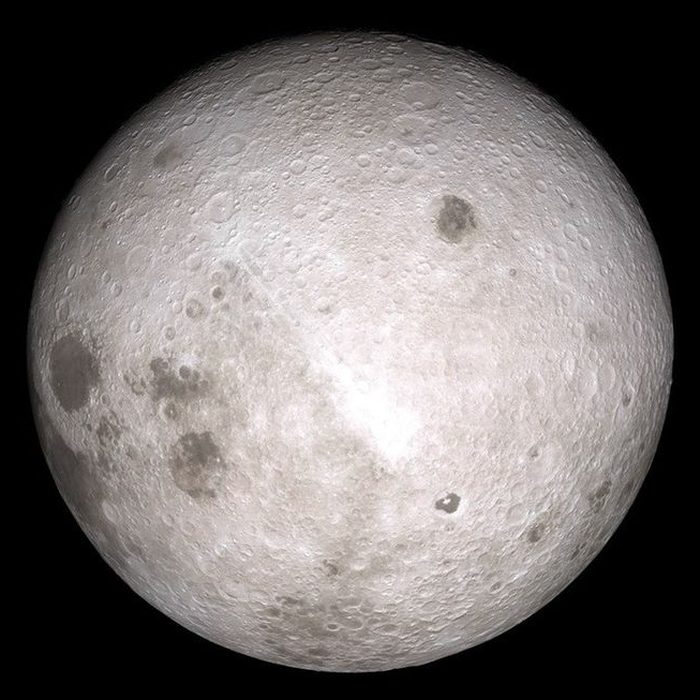
Photos: NASA
Check Your Understanding
Stuck on a question? Scroll up and use the simulation to figure it out.
Question 1 of 5